




Preparation and entry
Magic is played by two or more people. Normal Magic is played with 60 cards and can be played very well in pairs. Commander, another format, for example, is more fun with three or four players. Each player starts the game with 20 life points. To claim victory, you must reduce your opponent to 0 life points. There are other victory variants such as a combo of several cards or when a player can no longer draw any cards.
At the start of the game, you and your opponent each draw 7 cards. A good starting hand should contain 2-3 lands. If you don’t like the hand of cards you have drawn, you have the option of making a mulligan. This means that you discard your entire hand, draw -1 cards from your hand and shuffle your discarded cards back into your deck. You can repeat this process several times, reducing the number of cards in your hand each time. Therefore, do a mulligan carefully.
Basics
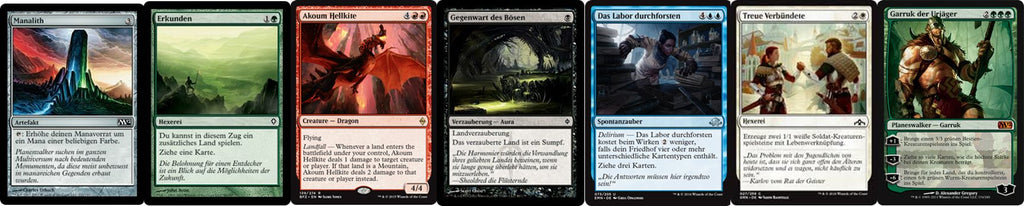
To be able to play Magic, you need a “deck”. A “deck” is a pile of cards that you build yourself or buy ready-made. Your deck, also known as your library, is your arsenal, your army and your entire resource. Your deck is only limited by a few rules. It must contain at least 60 cards and be shuffled by hand. You can find the respective format rules here. As a beginner, I recommend that you buy a deck and gain experience with it first. A big part of the fun, for me personally, is deck building. Putting together something of your own and then competing against your friends. It’s always exciting and new, even after a good 8 years of playing.
Each land has a mana symbol on it that corresponds to one of the five mana colors (excluding colorless ones). Cards that are not lands have their mana costs in the top right corner, both as numbers and as symbols.
Mana (Hawaiian for “power”) is the resource you need to cast spells.
In Magic the Gathering, all cards are “spells” before they enter the game. This does not apply to lands. Every card that is destroyed or discarded goes straight to the graveyard. You make a separate pile next to your library for this purpose.
The players take turns (or in turn if there are several players) to take a turn. With the exception of the first turn in the game, the player whose turn it is draws a card from their library at the start of their turn. A player can play a maximum of one land during their turn. Once a land has been played, it remains in play. This means that the more lands you control, the more mana you can spend.
Lands are your resource base. They give you the mana you need to play your cards. To generate mana, tap the corresponding land. You do this by placing the land in a horizontal position, i.e. sideways as shown in the picture. This movement is called “tapping”. The land is now used up for this round and will “untap” again in the next round. In other words, the inverse of “tapping”. You can play one land per round.
During a turn, a player can attack other players or their Planeswalkers once with a selection of their creatures. The defending players can in turn block the attacking creatures with their creatures. With the exception of instant spells, cards can only be played during a player’s own turn, outside of combat.
Structure of a Magic card
Card name
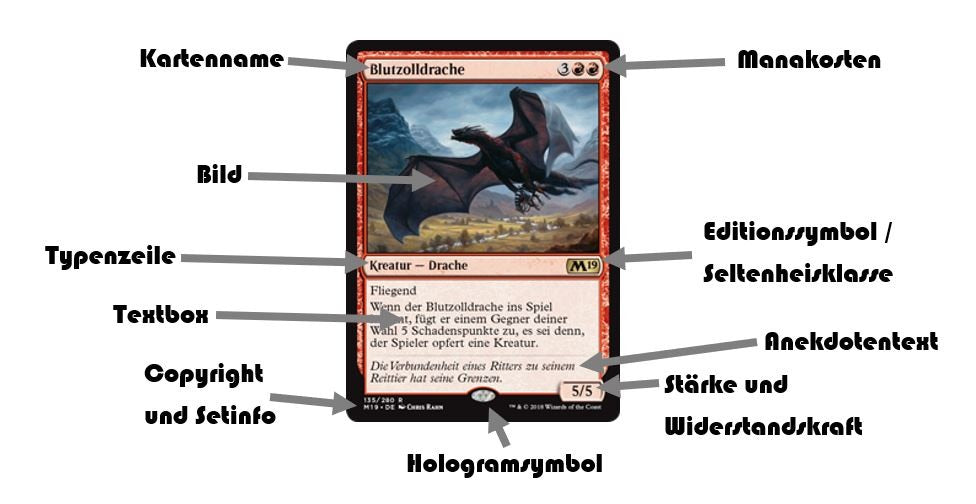
The name of the card is shown at the top left. This one, for example, is called Blood Toll Dragon.
Mana costs
Mana is the mystical energy in Magic that is needed to cast spells. This energy is usually obtained from your lands. The symbols in the top right-hand corner show the cost of casting a spell. In this case, any three mana plus two red mana (e.g. from two mountains) are required, making a total of five. The spell cost usually determines the color of a card.

Image
The picture of a card gives an impression of what this is all about. As the name suggests, the blood dragon is a dragon. This powerful dragon has a special ability: its wings.
Type line
This indicates the type of card: artifact, creature, land, Planeswalker, enchantment, sorcery or instant spell. Each card belongs to at least one of these types, and some also have so-called supertypes (which appear before the card type) and/or subtypes (which appear after the dash). The blood toll dragon is a creature, its subtype is the dragon creature type.

Edition symbol
The edition symbol indicates which Magic set the card comes from. The blood toll dragon is from the Magic 2019 main set.
The color of the edition symbol also indicates the frequency of the card. Black stands for frequent cards (Common) and standard lands, silver for less frequent cards (Uncommon), gold for rare cards (Rare) and red-orange for legendary cards (Mythic). Caution is advised with older cards (before 1998). These do not have this color scheme. There were also no Mythic Rares before 2008.

Textbox
This is where the card’s abilities are listed, or where you can see what effect the card has. Sometimes there is also a so-called reminder text (in italics and in brackets) that describes the effects of abilities. The blood toll dragon has flying. This ability represents its ability to control the air. In plain language, the creature flies in the air and thus has a few fewer opponents. The blood toll dragon has a “come into play effect”, i.e. an effect that occurs as soon as the card enters the field. In this example, the Blood Toll Dragon deals 5 damage to an opponent unless it sacrifices a creature.
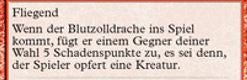
Anecdote text
If there is still space in the text box afterwards, there is often anectote text. This text (also in italics) has no effect on the game. Here you can learn something about the world of Magic, little stories, quotes or additional information about what the respective card represents.
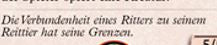
Copyright and set info
At the bottom left you will find the card number of the respective set. You can also see the artist and the edition.

Strength and resilience
Each creature card has a special field for strength and resistance in the bottom right-hand corner. The strength of a creature (the first number) indicates how many damage points it deals in combat. The resistance (the second number) shows how much damage it must be dealt in a single turn to destroy it. (A Planeswalker card has a special space in the same place as the origin loyalty). The blood toll dragon has a resistance of five, so it is quite tough. Its strength is just as high. It deals a lot of damage and can also take a lot.

The 5 colors
You can find an explanation of the different colors in Magic the Gathering here in a separate article. Have fun!
Card types explained
Creatures:
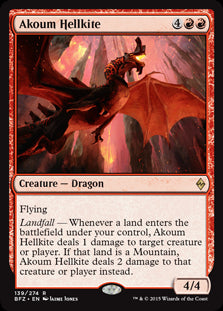
You can summon creatures to fight for you – attacking your opponent or defending yourself. Most creatures cannot attack in the same turn in which they were summoned – this is known as mission delay. Each creature has two numbers at the bottom right. These are the combat values, namely strength and resistance. The first number represents the attack power and the second its defense power. Just like any other spell, creatures also have a mana cost. You can find the amount of these at the top right of the card. A creature is a permanent card, so it remains in play until it is destroyed.
Witchcraft and spontaneous spells:
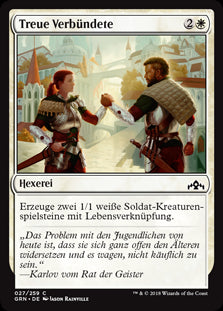
Sorceries and spontaneous spells are magical effects that are only triggered once.
Both are “non-permanent cards”. Once used, they go straight to the graveyard. One-time effects are never in play. You can only cast sorceries during your turn. However, you can cast instant spells at any time, even on your opponent’s turn.
Artifacts:
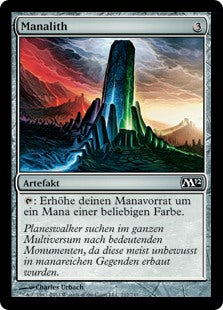
Artifacts are magical weapons, devices and constructs that you can use in your duels. They are often equipment to strengthen your creatures or mana dispensers. Artifacts often have no color or are grey. They usually do not require colored mana to be cast. This feature makes them very attractive in any deck, as every deck fulfills these requirements. If an artifact has a “tap effect”, it has no casting delay and can be used immediately.
Enchantments:
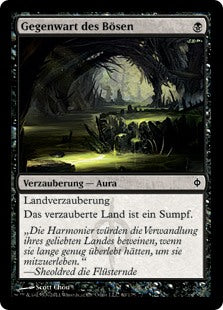
Enchantments are permanent spells that have an effect on the game for as long as they are in play. The respective rules text explains the effect of the card on the game. They are “permanent cards” just like creatures. Once played, they remain in play until they are destroyed.
Planeswalker
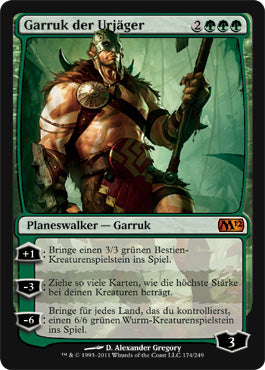
Planeswalkers are special cards. They are not creatures, but they are not players either. To simplify things, you can think of them more like a figure. The Planeswalker has neither an attack value nor resistance. The number at the bottom are its loyalty tokens. These indicate how “loyal” the character is to you. If the value drops to 0, the Planeswalker dies (leaves you). On the left, several abilities are marked with a + or -. Such an ability can only be used once per round and strengthens the Planeswalker with(+) or weakens it with (-) effects. They are also “permanent cards” like creatures. Once played, they remain in play until they are destroyed.
Countries
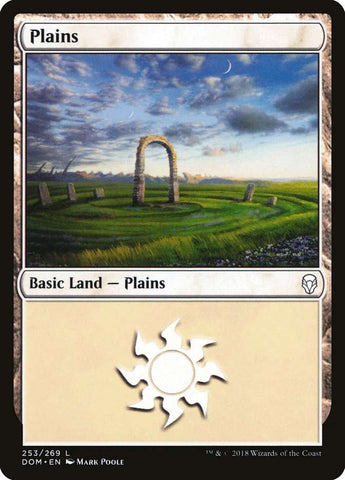
Lands are the basic resources of the game, as they can produce mana in different colors. There are five different standard lands (plain, island, swamp, mountain, forest), each of which can produce one mana point of its assigned color per round. In addition to the standard lands, there are a number of other lands, some of which have the ability to produce mana of different colors or have other effects. Playing a standard land is free of charge. Each player may only play one land in their own turn. Unlike all other card types, lands do not count as spells and therefore cannot be changed or prevented.
Sequence of a train
Rough listing of a train sequence:
-
Untap your cards
-
Draw a card
-
Play a land and/or cast a spell.
-
Fight
To play Magic as a beginner, the above list of the process is enough to get you started. If you are further along and want to know in more detail how a move is structured, stay tuned.
The complete turn in Magic the Gathering is divided into five phases:
Initial phase
-
Untap step (untap segment)
First, all of the active player’s permanents stabilize or destabilize with instability. Then, all of the active player’s permanents untap.
Important: No player has priority during this phase, so no spells or abilities can be played. Likewise, no lands can be tapped. It is therefore also not possible to tap lands that were untapped at the start of the turn for mana before untapping them.
-
Upkeep (supply segment)
All abilities that are triggered at the start of the upkeep segment go onto the stack, as do abilities that were already triggered in the untap segment. The active player then receives priority.
-
Draw Step (draw segment)
First, the active player draws a card and then abilities that trigger at the start of the draw segment are added to the pile. Finally, the active player receives priority.
Precombat main phase (main phase)
The main phases are the only two phases in which lands, creatures, artifacts, enchantments, Planeswalkers and sorceries can be played.
Combat Phase
-
Start fight
-
Attackers are declared
-
Blockers are declared
-
Combat damage is distributed
-
End of the fight
Postcombat main phase (main phase)
There are two main phases, one before and one after the combat phase.
During this phase, any type of card can be played, but only one land per turn.
Ending phase
Here, all abilities that trigger “At the Beginning of the End Step” go on the stack and the active player gets priority. This is where you play all the spells that you prefer to play at the end of your opponent’s turn. Abilities that work until the beginning of the next end step can also be used here.
Cleanup Step (cleanup segment)
The clean-up segment is the last segment of the train.
First, the active player checks whether the number of cards in hand exceeds the upper limit; if this is the case, the excess number of cards is discarded accordingly.
Damage from permanent cards is removed and effects that last until the end of the turn end.
Normally, no player gets priority unless an ability triggers (e.g. when cards are discarded) that goes over the stack. In this case, the active player gets priority.
As soon as the pile is empty, the turn ends.
Battle in Magic the Gathering

Creatures are able to fight. Tell your opponent that you want to attack. This move is important, as your opponent may want to intervene shortly beforehand. If your opponent does nothing, “tap” the creatures you want to attack with. A creature that has already been tapped cannot attack. A creature played this turn also can’t attack on the same turn. This is called “attack delay”. It is only allowed to attack next turn.
Important: In Magic, unlike other card games, you cannot attack other creatures directly. You always attack your opponent. He decides whether and how to block. We now switch to the second phase, namely blocking. Blocking does not cause a creature to be tapped, this only happens when it attacks. Example: Your opponent is afraid of the damage your angry horde will inflict on him and protects himself with his creatures. He can block one of your creatures with as many of his creatures as he wants. However, we are now assuming a 1 VS 1 battle.
After the blockers are declared, all attacking and blocking creatures deal damage to each other simultaneously. Each creature distributes its damage to the other creature’s toughness. Any creature that suffers damage equal to or greater than its toughness is destroyed and put into the graveyard.
Most important skills
Flying:
Creatures with flying can’t be blocked by creatures without flying. In other words, if a creature has flying, it can only be blocked by other flying creatures or other cards that can explicitly block flying creatures. One ability that can do this is called “Reach”.
First strike:
This ability becomes important in battle. If 2 creatures deal damage to each other, the “first strike creature” gets priority. This means it strikes first. If the damage is sufficient, the other creature dies without being able to deal damage. First strike strikes first.
Imagine a real fight: You knock someone out right away and then the other person can no longer harm you. It’s the same in Magic the Gathering.
If your strength is too low to kill the opponent’s creature straight away, your creature suffers the same damage as in a normal battle without special effects.
Vigilance:
A creature that has attacked can no longer block in the opponent’s turn (when attacking). This is where “vigilance” comes into play. Vigilance is the ability to attack without having to tap. You can do both, attack and block.
Here, too, you can imagine a real fight. A person who is constantly mindful is able to strike and defend themselves.
Haste:
Haste is the ability to attack on the same turn the creature is played. Normally, creatures have “attack delay”. This does not apply to creatures with haste.
Trampling damage:
If you attack with creatures and your opponent blocks your army, your opponent takes no damage. Trample damage deals the excess damage left over from your power to the blocking creature’s defense value. Small example:
Your creature has a combat value of 4/4. The defending creature has 2/1. Your power of 4 easily beats the defense value of 1. The difference of 3 is dealt to the opponent as damage.
Touch of death:
With death touch, the amount of damage is irrelevant (except 0). A 1/1 rat with deathtouch can easily kill a giant 20/20. It easily takes enough damage to get killed, but it seems to be a very good deal. Combat stats aren’t everything xD.
Double blow:
Double strike contains first strike. You learned that a creature with first strike may deal damage first. Here, the creature with double strike deals its damage twice and does so first. If the defending creature dies from the damage, the “double strike creature” suffers no damage.
————————————————————————————————————

You now know how to play Magic the Gathering. This article covers the most important parts of the game. You can find the complete Magic the Gathering rules on the official homepage. Do you have any questions? Write us your request.
 Lego
Lego