





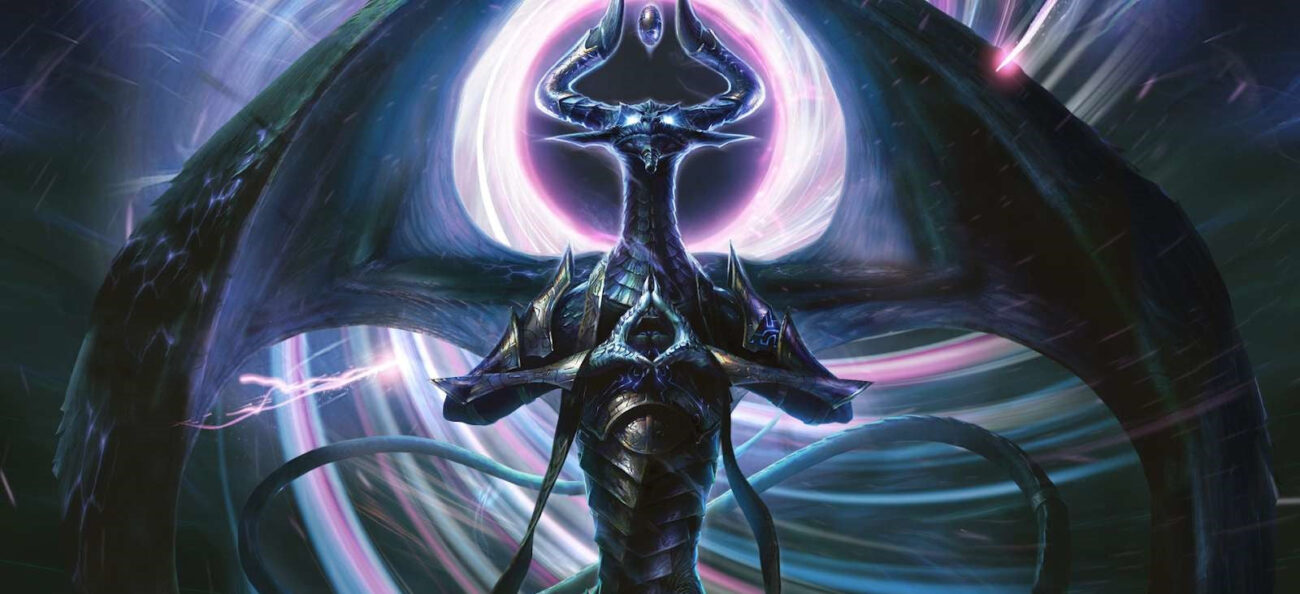
Planeswalkers come into play with a set number of loyalty counters printed on the bottom right of the card. A Planeswalker can be attacked like a player or dealt damage by an opponent who redirects the damage one of their spells would deal to the player controlling the Planeswalker (phew what a heavy sentence). Damage dealt to a Planeswalker removes that many loyalty counters and a Planeswalker with no loyalty counters is put into the graveyard.
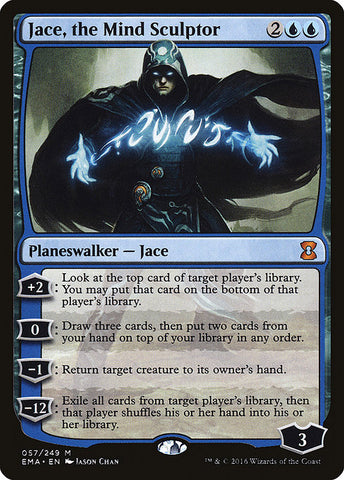
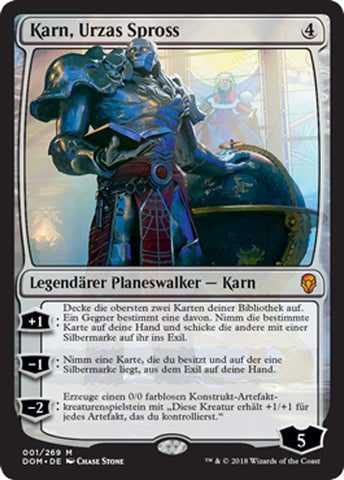
Planeswalkers usually have three abilities: one that adds loyalty counters as a cost for a small benefit, one that removes a small amount of counters as a cost for a larger effect, and one that removes a large number of loyalty counters for a large effect. The last effect is commonly referred to as the Planeswalker’s “ultimate” ability and usually leaves the opponent in a destroyed state. A player must build up the loyalty to access it.
How do I deal with a Planeswalker?
Most Planeswalkers have 2-4 abilities, as Jace, the Mind Sculptor demonstrates. Each of these abilities has a positive or negative number next to it
At the bottom right you have a number. This is the number of loyalty tokens he has.
If you control a Planeswalker on the battlefield, you can only use one ability at a time during your turn and only during the time you could cast a sorcery. When you choose an ability, the number next to it is added to or subtracted from your loyalty counters. You should always remember to make sure that the number of loyalty counters does not drop to zero, otherwise the Planeswalker will leave the game.
Destroy Planeswalkers
Another way to think of a Planeswalker is to assign itself to another player under the control of its owner. However, a Planeswalker’s options are limited to the abilities on the card. The Planeswalker also has “life”, as does every other player (in the form of loyalty tokens). This life total can be increased by using the (+) abilities and decreasing with the (-) abilities, as well as by taking damage.
One way to eliminate a Planeswalker is to attack it. Its controller can block with creatures the same way you could if it attacked you. Any unblocked damage is removed from the Planeswalker’s loyalty counters.
deducted . When a Planeswalker’s loyalty counters reach 0 (or less), that Planeswalker is sent from the field to the graveyard.
If a spell or ability you control would deal damage to an opponent, you can redirect that damage to a Planeswalker that player controls instead. For example, while you can’t target a Planeswalker directly for Shock (2 damage to a player), you can target your opponent when you cast Shock and redirect the 2 damage to one of their Planeswalkers when the spell resolves instead of dealing it to the player of your choice. You can’t split damage from a single source between a player and a Planeswalker.
Cards that affect creatures do not affect Planeswalkers.
If you have two Planeswalkers with the same subtype on the field, you must put one of them into your graveyard.
Tips for using Planeswalkers
Keeping Planeswalkers alive can be tough. Especially when your opponent knows what’s coming. Try to have creatures ready to block before you cast your Planeswalker and make sure you have a solution in hand to intervene just in case. Also note that a Planeswalker can keep you alive by distracting your opponent from all your life. Used correctly, Planeswalkers are powerful tools. And with War of the Spark, there are now weaker and less rare Planeswalkers.
 Lego
Lego